


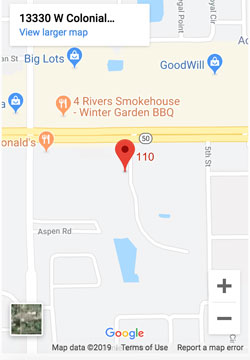
Main Office
13330 W Colonial Drive Suite 110, Winter Garden, FL 34787
Phone: (407) 982-4321
Partnership breakups can be as painful and as expensive as a divorce, and the partner who prepares first usually comes out ahead. A partnership dispute lawyer at Legal Counsel, P.A. helps Orlando owners negotiate a buyout, divide the company, or litigate.
The strongest protection against a bad breakup is a sound partnership agreement that says what happens if the partners part ways. Many businesses never had one, and many that did have outgrown it. If yours has no written agreement, or the document doesn’t cover the situation you’re in, Florida’s default rules decide the outcome, and those defaults were not written with your business in mind.
Legal Counsel, P.A. is an Orlando business litigation firm whose business lawyers represent partners, LLC members and shareholders when a business relationship breaks down. Some breakups can be resolved through an out-of-court settlement or mediation. Others end in litigation because a partner has taken business funds, frozen the other out of the accounts, or refused a fair buyout.
A disagreement over one decision is a business dispute; a partner who is draining the company is something else, and our attorneys treat the two differently. Either way, the priorities are the same: protect your ownership interest, protect the business and its reputation, and get you out or get the other partner out on terms you can live with.
Michele Diglio-Benkiran founded the firm and has practiced business and real estate law since 1999, and Richard Sierra brings more than three decades of commercial litigation experience to the disputes that don’t settle.
Call Legal Counsel, P.A. at 407-982-4321 for a free consultation, or tell us what’s
happening in the business online.
The time to prepare for a breakup is long before there’s any sign of one. If you’re about to go into business with someone, even a friend or a family member, put a written agreement in place first.
That agreement should say who owns what, who decides what, how profits and losses are shared, what capital contributions each partner is expected to make, how business assets are titled, whether disputes go to mediation or arbitration before court, and what happens when a partner dies, becomes disabled, wants out, or has to be pushed out.
If you’re already in a business with partners that’s going well but have nothing in writing, now is the time to formalize it. A partnership agreement attorney Florida owners can meet with in person will draft one that reflects the deal you actually made.
What are the common reasons for disputes between business partners, and what can you do when disagreements start to arise frequently? Here is what we see most often:
A business divorce means hard decisions: whether to split the company into two, whether one partner buys the other out, and how to value the business fairly. A business partnership dispute lawyer at Legal Counsel, P.A. helps you make those decisions with the leverage the law gives you.
If you and your partner have decided to part ways, or one of you has decided for both, consider your options with a partnership disputes lawyer before you act. Michele Diglio-Benkiran and the attorneys at Legal Counsel, P.A. can help you understand where you stand and craft a solution that’s right for you and for the business, and we’ll give you formal legal advice rather than a guess.
A Florida general partnership without a written agreement is governed by the Florida Revised Uniform Partnership Act, which sets the default rules on how partners leave and how they’re paid. A partner can dissociate by giving notice. In a partnership at will, that notice can trigger a dissolution of the company and a winding up of its affairs.
Where the business continues without the departing partner, the statute requires the remaining partners to purchase the departing partner’s interest at a price based on what that partner would have received if the business had been sold as a going concern or liquidated, whichever is greater.
It also puts a clock on the negotiation: if there’s no deal within 120 days of a written demand, the business must pay its estimate of the buyout price. A partner who leaves in breach of contract can owe damages and may have to wait for payment.
Businesses organized as LLCs follow a different statute, the Florida Revised Limited Liability Company Act, where the operating agreement controls and, absent one, a member’s exit and the possibility of judicial dissolution are governed by default rules. Corporations follow the Business Corporation Act and the shareholder agreement. Which set of rules applies to you is the first thing a shareholder and partnership disputes lawyer checks, because the answer changes the strategy.
In every form of business, partners and members owe one another fiduciary duties of loyalty and care. A partner who diverts business opportunities, competes against the company, uses company funds for personal purposes or hides financial reporting from the others has likely breached a fiduciary duty.
The business can recover damages for that breach of duty, and the claim often travels alongside a breach of contract claim under the written agreement itself. These are among the most common causes of action in a business divorce. Our article on breach of fiduciary duty claims explains what it takes to prove one.
If you think a breakup is coming, protect your interests early. Legal Counsel, P.A. represents Orlando business owners through partnership breakups while protecting their ownership, their business and their rights.
These cases sit at the intersection of contract law, business law and litigation, and our law firm practices all three. A litigation attorney who has also drafted the underlying agreements knows where the disagreement usually starts. Michele Diglio-Benkiran founded the firm and has practiced business and real estate law since 1999, which matters when the company’s main asset is a building or a portfolio of rental properties, as it often is.
Richard Sierra is a commercial litigation and bankruptcy lawyer with more than three decades of experience, and partner disputes that involve insolvency or a partner’s bankruptcy are squarely in his background.
Results matter, and so does knowing when to settle. We offer a free consultation, and pay later options are available for clients who qualify.
We represent partners, members and shareholders in Orlando and throughout Orange County, and across Central Florida from our Winter Garden, Orlando and Seminole offices, including Seminole, Osceola, Lake and Polk counties. Contested cases in Orlando are filed in the Circuit Civil Division of the Ninth Judicial Circuit at the Orange County Courthouse. Our litigation team handles these cases as part of our broader business litigation practice.
Get legal advice before the other partner does. We can lay out your options in one
meeting, and the consultation is free.
Start with the partnership or operating agreement, which usually sets the procedure and the price. If there isn’t one, Florida law lets a partner dissociate by notice and requires the partnership to buy out the departing partner’s interest. Either way, do it in writing, with a release of claims, and with counsel. Our guide to partnership breakup attorneys walks through the steps.
In order: a direct conversation, then a structured negotiation with counsel, then mediation, then arbitration or litigation if the agreement or the facts require it. Most of these cases settle at the negotiation or mediation stage once both sides understand what the law gives them and what litigation would cost the business.
Read your agreement, gather the financial records, and stop signing anything that changes ownership or control until you’ve had advice. Don’t drain accounts or lock a partner out; those actions create claims against you. Then talk to a lawyer before the dispute hardens into positions.
Florida’s default rules apply: equal shares of profits and losses regardless of contributions, equal management rights, a right to dissociate on notice, and a statutory buyout formula. Those defaults are frequently unfair to the partner who contributed more, which is one reason to negotiate rather than litigate under them.
The agreement usually governs. Without one, the departing partner dissociates by notice, and the remaining partners either continue the business and purchase that partner’s interest or wind the company up. The buyout price and terms are where most of the negotiation happens.
Sometimes. A partner can be expelled under the terms of the agreement, by unanimous vote in limited circumstances, or by court order for wrongful conduct such as a material breach of the agreement or of the duties owed to the partnership. Absent grounds, the more common route is a negotiated buyout.
Yes, if the agreement provides for expulsion or the other partners have statutory grounds. The company continues, the departing partner’s interest is purchased, and the business goes on. Without grounds, the only route is a negotiated exit.
By agreement if the written agreement has a formula, and by appraisal if it doesn’t. Florida’s default measures the departing partner’s share against the greater of liquidation value and going-concern value. In practice, a business valuation by an independent appraiser is usually obtained, and the partners negotiate from there.
Yes. Partners owe each other loyalty and care, and self-dealing, diversion of opportunities, competing with the partnership, or concealing financial information can support a claim for damages, an accounting, or removal.
Usually. A demand letter, a negotiated exit, or a mediated settlement resolves most disputes between partners. Litigation becomes necessary when a partner refuses to negotiate, is hiding money, or is damaging the business faster than a settlement can be reached.
Yes, and quickly. Vendors, employees and customers notice when partners stop cooperating, and a frozen bank account or a deadlocked decision can stall the company. Part of our job is keeping the business running while the dispute is resolved, sometimes through interim agreements on who signs what.
Mediation is the step most cases pass through first. A neutral mediator meets with both partners and their lawyers, usually in one session, to negotiate a buyout, a division or a dissolution plan. Orange County courts typically require it before trial, and many cases settle there because both sides recognize what litigation will cost the business. If the agreement requires arbitration instead, the case is heard privately by an arbitrator rather than a judge.
A negotiated buyout with cooperative partners can be documented in a few weeks. A contested dissolution with valuation disputes and fiduciary duty claims commonly takes a year or more. Our article on business partnership dissolution covers what to expect.
A written agreement that addresses money, control and exit; regular financial reporting to every partner; and a buy-sell provision that sets the price and terms before anyone wants to use it. Most of the disputes we litigate would have been a short negotiation if those three things had been in place.
Whether you’re an investor looking to wholesale real estate or a homeowner who needs to sell and buy on the same day, a simultaneous closing rewards preparation and punishes improvisation. Call Legal Counsel, P.A. at 407-982-4321 or use our contact form to schedule your free consultation.

WE VALUE RELATIONSHIPS
Most of our clients come to us by referral and word of mouth (not advertising).

COMMITMENT TO EXCELLENCE
The Legal Counsel team is committed to serving all clients with excellence and professionalism.

EXPERIENCE MATTERS
Decades of Representation.

CUTTING EDGE TECHNOLOGY
View your entire case, communicate with us 24/7, review billing statements, documents, etc. on our bank secure, online client portal.