


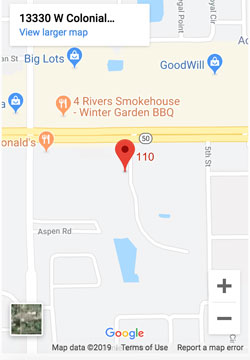
Main Office
13330 W Colonial Drive Suite 110, Winter Garden, FL 34787
Phone: (407) 982-4321
You own property with someone who won’t sell, won’t buy you out, and won’t split the bills. A partition action lawyer at Legal Counsel, P.A. can end the standoff. We represent Orlando co-owners in partition cases from negotiation through judgment.
Plenty of people end up owning real estate together without ever planning to. A couple buys a home and then divorces. Siblings inherit their parents’ house. Two friends go in on a rental, or a group of investors buys a parcel to develop later.
As long as everyone agrees on what to do with the property, co-ownership works. The trouble starts when one owner wants to sell and another wants to keep it, or when one person is paying the mortgage, taxes and insurance while the others contribute nothing.
Florida law doesn’t make anyone stay in a co-ownership they want out of. Any co-owner, whether a joint tenant or a tenant in common, has the right to ask the court to divide the property or sell it and split the proceeds. That court proceeding is a partition action, and it’s the tool a partition attorney uses when the owners can’t reach a deal on their own.
Legal Counsel, P.A. has handled partition matters in Orange County and the surrounding counties for years. Our founder, Michele Diglio-Benkiran, has practiced law since 1999 with an emphasis on business and real estate law. Our approach to a partition case starts with the question that decides most of them: is there a deal to be made before anyone files, and if not, how do we put you in the strongest position once we do?
Call Legal Counsel, P.A. at 407-982-4321 for a free consultation, or reach us online.
A partition action is a lawsuit that asks a judge to divide jointly owned real property among its owners, or to sell it and divide the money. It’s an equity action heard in circuit court, and it has to be filed in the county where the land sits. Partition actions in Florida are governed by Chapter 64 of the Florida Statutes, which lays out who can file, what the complaint must say, and how the court decides between a physical division and a sale.
The complaint describes the property, names every owner and states each person’s share. If the court finds you’re entitled to partition, it enters a judgment adjudicating everyone’s interests.
From there, the court decides whether the land can be divided fairly or has to be sold. If it can be divided, the judge appoints commissioners to draw the lines. If it can’t be divided without hurting the owners, the court orders a sale, and the proceeds are distributed according to each owner’s share after costs are paid.
That last step is where a good partition action attorney earns their fee. The court doesn’t simply split the sale price down the middle. An owner who paid more than their share of the mortgage, taxes, insurance or necessary repairs can ask for a credit out of the proceeds, and an owner who collected rent or lived in the property alone may face an offset. The accounting between co-owners is often worth more than the argument over whether to sell at all.
Inherited property gets special treatment. Since 2020, Florida has followed the Uniform Partition of Heirs Property Act for land that passed down through a family without a will or trust and is still owned by relatives. Before any forced sale, the court orders an appraisal and gives the other heirs a chance to buy out the owner who wants to leave. If nobody buys, the court favors an open-market sale through a broker over a courthouse auction, which usually means a better price for everyone.
Florida recognizes two outcomes in a partition case, and the property itself usually decides which one applies.
If the property can be physically divided, the court splits it. A large tract of vacant land is the classic example. Each owner walks away with a smaller parcel that’s entirely theirs, and no sale is needed. Commissioners appointed by the court handle the division and may hire a surveyor to set the boundaries.
A house, a condo or a small lot can’t be cut in half without destroying its value, so the court orders it sold and divides the proceeds instead. Florida law allows the sale to be a public auction conducted by the clerk, or a private sale on terms the court approves if the parties agree. The proceeds go first to costs and any liens, then to the owners in proportion to their interests, adjusted for the credits and offsets described above.
A partition can also be voluntary. When co-owners agree on a division or a sale but need it documented and enforceable, we draft the agreement and deeds so nobody has to go to court. When they don’t agree, the case goes to a judge, and the disputes tend to be about who owns what percentage, who gets credit for what, and whether the property can be divided at all.
Partition tied to a divorce adds a layer, because the family court’s equitable distribution ruling and the partition court’s accounting have to line up.
Litigation is always more expensive than agreement, so we look for a negotiated solution first. A real estate partition lawyer can often get co-owners to a buyout, a listing agreement or a written division plan through direct negotiation or mediation, and Orange County judges routinely send partition cases to mediation before trial in any event. If you and your co-owner are only a few thousand dollars apart on a buyout price, mediation is almost always the better path.
Some cases can’t settle. One spouse wants to keep the family home while the other needs the equity out. Business partners disagree about developing land versus holding it. Siblings inherit a house and one of them has been living there rent-free for years.
When that’s the situation, we file, and we make sure the accounting claims are pleaded from the start so they aren’t lost. Either way, the goal is the same: get you out of a co-ownership that isn’t working, with the share you’re actually owed.
Partition cases are real estate litigation, and that’s the center of what we do. Michele Diglio-Benkiran founded the firm and has practiced business and real estate law since 1999. Richard Sierra is a commercial litigation and bankruptcy lawyer with more than three decades of experience overseeing civil litigation. Between transactional work and courtroom work, we’ve seen what a co-ownership looks like when it’s set up properly and what it looks like when it falls apart, and that informs how we value your case.
Results matter to us, and so does what the case costs you. We offer a free consultation, and we talk about fees, timelines and settlement value before you commit to anything. Pay later options are available for clients who qualify.
Partition actions for property in Orlando are filed in the Circuit Civil Division of the Ninth Judicial Circuit at the Orange County Courthouse on North Orange Avenue downtown. We also handle partition matters in Seminole, Osceola, Lake and Polk counties, and our real estate litigation work extends across Central Florida from our Winter Garden, Orlando and Seminole offices.
Partition is one piece of a broader real estate litigation practice that also covers quiet title, ejectment, escrow disputes and tax deed matters.
A partition action attorney can tell you in one conversation whether a buyout, a division
or a sale is the realistic path. The consultation is free.
A lawsuit in which a co-owner of real property asks the court to divide the property among the owners or sell it and divide the proceeds. It’s the legal remedy for co-owners who can’t agree on what to do with a property they hold together.
Any co-owner with a legal interest in the property, including joint tenants and tenants in common. The size of your share doesn’t matter; a ten percent owner has the same right to file as a ninety percent owner.
Yes. Any co-owner has the right to seek partition, and if the property can’t be fairly divided, the court will order it sold. The other owners can’t veto the filing, though they can ask for credits, argue about percentages, or offer to buy out the owner who wants to leave.
Partition in kind physically divides the land so each owner gets their own parcel. Partition by sale sells the property and divides the money. Courts prefer division in kind where it’s practical, but for a house or a condo it almost never is, so most residential partitions end in a sale.
Evaluates whether the case can settle, drafts or responds to the complaint, pleads the credits and offsets you’re owed for mortgage payments, taxes and repairs, handles the valuation and sale process, and negotiates a buyout when one is available. Our partition action lawyer guide walks through each of those steps.
You aren’t required to have one, but partition involves pleading rules, an accounting between the owners and a court-supervised sale, and mistakes in any of those cost real money. A co-owner who files without counsel often loses credits they were entitled to simply because nobody asked for them.
The court apportions the costs of the case, including attorney’s fees in many situations, among the owners in proportion to their interests, usually out of the sale proceeds. An owner who forced the case by refusing a reasonable offer can end up bearing more of the cost. We cover this in detail in our partition lawsuit cost guide.
It depends on whether the case settles early or goes through a contested accounting and sale. A negotiated buyout can be resolved for a fraction of what a litigated partition costs. We’ll give you a realistic range at your consultation based on the property and the dispute.
An uncontested partition can move in a few months. A contested case with disputes over ownership shares, credits and the manner of sale commonly takes a year or longer, and the sale itself adds time on the back end.
Usually, yes. A co-owner who paid more than their share of the mortgage, property taxes, insurance or necessary repairs can claim a credit for the excess out of the sale proceeds. Keep records, because the credit is only as good as the proof behind it.
You can offer to buy out your co-owner’s share, and in most cases that’s the outcome the court would prefer as well. If the property is heirs property, you have a statutory right to buy out the filing co-owner at appraised value before any sale is ordered.
Not by refusing to cooperate. The right to partition is nearly absolute in Florida. The case can be resolved by agreement at any point, though, and the most common resolution is one owner buying the others out at a price both sides can live with. Our guide on how to approach a partition action explains the choices.
The right itself is hard to defeat, but the terms are not. Common defenses go to the ownership percentages claimed, the credits and offsets, whether the property can be divided in kind rather than sold, and whether a prior written agreement between the owners waived or limited partition.
Yes. If the property qualifies as heirs property, the court must order an appraisal and give the other heirs the first chance to buy out the co-owner who filed. Only if that buyout doesn’t happen does the court move to a partition in kind or an open-market sale.
No. Florida law permits a public sale by the clerk, but the court can approve a private sale on terms the parties agree to, and for heirs property it favors an open-market listing through a broker. A private or listed sale almost always brings a better price than an auction.
Yes, and most partition cases in Orange County pass through mediation whether the parties want it or not, because the court orders it before trial. Mediation early in the case, before both sides have spent heavily on litigation, is often where a buyout gets done.
The proceeds pay the costs of sale and any mortgages or liens first. The remainder is divided according to each owner’s percentage interest, adjusted for the credits and offsets the court awards for unequal contributions or exclusive use.
Yes. We handle partition actions in Orange, Seminole, Osceola, Lake and Polk counties from our Winter Garden and Orlando offices, and in Pinellas and Hillsborough counties from our Seminole office.
If you co-own property and the other owners won’t agree on what to do with it, talk to a partition action attorney before the dispute costs you more than the property is worth. Call Legal Counsel, P.A. at 407-982-4321 or use our contact form to schedule your free consultation.

WE VALUE RELATIONSHIPS
Most of our clients come to us by referral and word of mouth (not advertising).

COMMITMENT TO EXCELLENCE
The Legal Counsel team is committed to serving all clients with excellence and professionalism.

EXPERIENCE MATTERS
Decades of Representation.

CUTTING EDGE TECHNOLOGY
View your entire case, communicate with us 24/7, review billing statements, documents, etc. on our bank secure, online client portal.