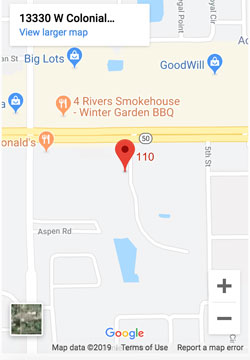
Main Office
13330 W Colonial Drive Suite 110, Winter Garden, FL 34787
Phone: (407) 982-4321
Community associations run on rules, dues and trust, and a dispute over any of them can divide a neighborhood fast. An HOA attorney in Orlando at Legal Counsel, P.A. advises boards and developers, and represents homeowners and condominium owners who believe they’re being treated unfairly.
A homeowner association has real legal duties: to collect assessments, enforce its covenants, keep proper records and issue accurate estoppel certificates. Each of those duties comes with procedures set by Florida statute and by the association’s own governing documents, and skipping a step can expose the association to liability or leave a debt uncollectable.
Legal Counsel, P.A. advises homeowners’ associations, condominium associations and developers across Orlando and Central Florida. Our homeowner association lawyer team handles the day-to-day questions as well as the disputes. An HOA lawyer Orlando boards work with at our firm can help with:
Owners have rights, too. If you believe your association is assessing you unfairly, enforcing its rules against you but not your neighbors, or refusing to make a reasonable accommodation for a disability, our HOA attorneys can review your governing documents and the association’s conduct and give you legal guidance on your options. We also review estoppel certificates and association documents for buyers before they close on a home or condominium.
Call Legal Counsel, P.A. at 407-982-4321 for a free consultation
with an Orlando HOA attorney.
Florida has separate statutes for the two most common kinds of community association. HOAs are governed by Chapter 720 of the Florida Statutes, and each condominium association by Chapter 718. A condo association and a homeowner association can look alike from the street, but they answer to different rules, so the first question in any association matter is which law applies. The association’s declaration of covenants, articles of incorporation and bylaws then fill in the details, and a single bylaw can decide how a vote or a fine has to be handled.
The Florida Legislature has also rewritten parts of HOA law in recent years. A 2024 reform added director education requirements, required associations with 100 or more parcels to post key governing and financial documents on a website or app, created criminal penalties for certain records misconduct, and limited how and when fines can be imposed. Governing documents written before those changes often need updating.
When an owner falls behind, the association has a duty to collect, but Florida law sets the order of steps. Before an association can charge attorney’s fees on a past-due assessment, it has to send a notice of late assessment and give the owner 30 days to pay. If the balance still isn’t paid, the association can send a notice of intent to record a claim of lien, which gives the owner 45 more days. Only after that period can it record the lien, and it must send a separate notice at least 45 days before filing a lien foreclosure.
The association also has to collect consistently. Waiving fees for one owner and pursuing another can create defenses later. Our HOA lawyers handle collection letters, payment plans, liens and, when necessary, foreclosure of the association’s lien.
If your association has sent a notice of intent to lien, you still have options. Many owners negotiate a payment plan, dispute amounts that weren’t properly assessed, or challenge fees that were charged before the required notices went out. The earlier you respond, the more room there is to resolve the balance before it becomes a lien or a lawsuit. If the association has already filed to foreclose, our Orlando foreclosure defense lawyers can review the case.
When a home or condominium in a community association is sold or refinanced, the association must issue an estoppel certificate within 10 business days of the request, stating what the owner owes. The fees an association can charge for the certificate are capped by statute. Accuracy matters, because an association that understates the balance generally can’t collect the difference from a buyer or lender who relied on the certificate in good faith.
We prepare and review estoppel certificates for associations, and we review them for buyers who want to know exactly what they’re taking on before closing on a home in an HOA or condo community.
Covenants protect the look, safety and value of a community, and boards have a duty to enforce them fairly and uniformly. Under Florida law, before an HOA can levy a fine or suspend use rights, it must give the owner at least 14 days’ written notice of a hearing before a committee of at least three members who aren’t officers, directors or employees of the association, or their close relatives. The committee has to approve the fine, and the association must send written findings within 7 days of the hearing.
Since the 2024 reforms, an owner who cures the violation before the hearing generally can’t be fined for it, and a fine can’t be due any sooner than 30 days after the owner is notified. Florida law also now bars fines for leaving garbage cans at the curb within 24 hours of pickup, and limits fines for holiday decorations. Unless the governing documents say otherwise, fines are capped at $100 per violation and $1,000 in total for a continuing violation, and a fine under $1,000 can’t become a lien.
Your declaration, articles and bylaws decide how rules are made, how they’re enforced and how the documents themselves can be amended. When the documents are outdated or unclear, collections and enforcement both get harder. We draft new governing documents for developers, and we review and amend existing ones for boards so they match current Florida law.
Board members also owe fiduciary duties to the association’s members. That means acting in good faith, avoiding conflicts of interest, and applying the rules evenly. Our HOA attorneys advise boards on those duties and on the director certification Florida now requires within 90 days of election or appointment.
Many HOA disputes resolve with a letter, a hearing or a negotiated agreement. For disputes over covenant enforcement, amendments to the governing documents, meetings and access to official records, Florida requires pre-suit mediation before either side can file a lawsuit. Election and recall disputes aren’t eligible for pre-suit mediation; they go to state arbitration or directly to court. Collection cases are handled separately.
When a case does go to court, Florida’s HOA statute awards reasonable attorney’s fees and costs to the prevailing party, which raises the stakes for both sides. Our litigation team represents associations enforcing their covenants and collecting what they’re owed, and owners challenging an association that has overstepped its authority.
Michele Diglio-Benkiran founded the firm and has practiced business and real estate law since 1999. She’s a member of The Florida Bar’s Real Property, Probate and Trust Law Section and the Orange County Bar Association. Richard Sierra is a commercial litigation and bankruptcy lawyer with more than three decades of experience, and he handles the disputes that can’t be settled.
Because we advise associations and represent owners, we understand how HOA disputes look from both sides of the table. Results matter. We offer a free consultation, and pay later options are available for qualifying clients.
We represent associations, boards and owners throughout Orange County and Central Florida from our Winter Garden, Orlando and Seminole offices. HOA lawsuits in Orange County are filed in Orange County Court or the Ninth Judicial Circuit, depending on the amount in dispute, and heard at the Orange County Courthouse, 425 N. Orange Avenue in downtown Orlando. Association law often overlaps with real property questions, and our Orlando real estate attorneys and the rest of our Orlando law firm work together when it does.
An HOA attorney Orlando boards and owners can meet with in person or by video can review
the documents and tell you where you stand. Schedule a consultation; the first one is free.
It depends on the work. Document reviews, estoppel certificates and routine collection letters are often handled for a flat or predictable fee, while litigation is billed on scope. In many HOA lawsuits the prevailing party can recover reasonable attorney’s fees. We’ll quote the fee at your consultation.
Start with the governing documents and the notices you’ve received, since the association has to follow both. You can request a hearing, ask to inspect the association’s official records, and raise the issue at a board meeting. Many disputes require pre-suit mediation before a lawsuit can be filed, and an HOA attorney can tell you which steps apply.
Before a problem escalates. For boards, that means before adopting new rules, starting collections or amending the documents. For owners, it’s when you receive a notice of intent to lien, a fine you believe is unfair, or a denial of a request you think the association should grant.
It usually refers to Florida’s five-year statute of limitations for lawsuits based on a written document, which courts have applied to claims involving HOA governing documents. How it applies to a continuing violation depends on the facts, so ask an attorney before relying on it.
Yes. An association can foreclose its lien for unpaid assessments after sending the required notices, and in many cases even when the home is your homestead. That’s why it pays to respond early to a notice of late assessment or a notice of intent to lien.
No. Florida law requires at least 14 days’ notice and a hearing before an independent committee before a fine, or a suspension for a rule violation, can be imposed. If you cure the violation before the hearing, the association generally can’t fine you for it.
It’s a statement from the association of what an owner owes, issued when a home or condominium is sold or refinanced. The association must issue it within 10 business days of the request, and it’s generally bound by the amounts it states.
It depends on what was damaged and what the governing documents say. Associations usually maintain the common areas, and in condominiums they may also be responsible for certain building components. An attorney can read your declaration and tell you who’s responsible.
Both. We advise HOA boards, condominium associations and developers, and we provide legal representation for homeowners and condo owners in disputes with their association, as long as there’s no conflict of interest. Homeowners association law gives both sides rights, and knowing how each side sees a dispute helps us anticipate the other side’s position.
Florida HOA laws give owners the right to inspect the association’s official records, attend board meetings, receive notice and a hearing before a fine, and challenge assessments that weren’t properly adopted. Your property rights also depend on your declaration, so the governing documents are always the starting point.
Homeowners’ associations are governed by Chapter 720 of the Florida Statutes, and condominium associations by Chapter 718. The rules on budgets, reserves, records, estoppels and dispute resolution differ, so the answer to most association questions starts with which chapter applies.
Legal Counsel, P.A. has offices in Winter Garden, Orlando and Seminole, and we also meet by phone and video, which helps boards whose members work during the day.
Whether you sit on the board or live in the community, you deserve clear answers. Call Legal Counsel, P.A. at 407-982-4321 or use our contact form to schedule your free consultation with an Orlando HOA attorney.

WE VALUE RELATIONSHIPS
Most of our clients come to us by referral and word of mouth (not advertising).

COMMITMENT TO EXCELLENCE
The Legal Counsel team is committed to serving all clients with excellence and professionalism.

EXPERIENCE MATTERS
Decades of Representation.

CUTTING EDGE TECHNOLOGY
View your entire case, communicate with us 24/7, review billing statements, documents, etc. on our bank secure, online client portal.