


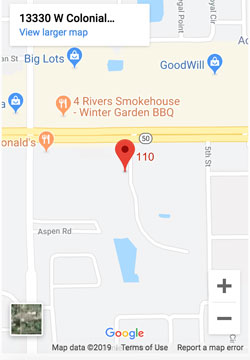
Main Office
13330 W Colonial Drive Suite 110, Winter Garden, FL 34787
Phone: (407) 982-4321
Most people put off estate planning until a diagnosis, a new baby or a close call makes it urgent. An estate planning attorney in Orlando at Legal Counsel, P.A. helps you decide who gets what, who’s in charge, and who speaks for you if you can’t.
A will is the foundation, but an estate plan also covers what happens while you’re alive and unable to act for yourself. A complete plan answers four questions: who receives your property, who manages it, who makes financial decisions if you’re incapacitated, and who makes medical decisions if you can’t. When those answers aren’t written down in documents Florida recognizes, a court and the state’s default rules answer them for you.
Legal Counsel, P.A. prepares estate plans for individuals, couples and business owners across Orlando and Central Florida. An estate planning lawyer Orlando families work with at our firm starts by listening, because a plan that fits a young family with a first home looks nothing like one for a retiree with a rental property and grown children from two marriages.
Our estate planning attorneys prepare the documents that make up a complete Florida estate plan:
Call Legal Counsel, P.A. at 407-982-4321 for a free consultation. We’ll review
what you have now and tell you plainly what’s missing.
Your will names your beneficiaries, the personal representative who’ll settle your estate, and a guardian for any minor children. Florida is strict about how a will is signed: it has to be in writing, signed at the end by you, and signed in the presence of two witnesses who also sign in front of you and each other. A notary isn’t required for the will to be valid, but adding a notarized self-proving affidavit lets the probate court accept the will without tracking down the witnesses later. Florida has also allowed electronic wills since 2020, and in some circumstances the witnesses can take part remotely through an online notary.
A revocable living trust holds your assets during your life, lets you stay in control, and passes those assets to your beneficiaries without probate when you die. It also keeps the details of your estate out of the public court file. In Florida, the parts of a revocable trust that take effect at death have to be signed with the same formalities as a will, so a trust signed without two witnesses may not do what it was meant to do.
An irrevocable trust gives up some control in exchange for other goals, such as protecting a beneficiary who shouldn’t receive a lump sum or planning for estate tax. A trust also lets you decide when an heir inherits, for example in stages at 25, 30 and 35 rather than all at once at 18.
A durable power of attorney appoints someone you trust to handle your finances if you can’t. Florida requires it to be signed with two witnesses and a notary, and certain “superpowers,” such as creating or changing a trust, making gifts, or changing beneficiary designations, only count if you separately sign or initial next to each one. Without a valid power of attorney, your family may have to go to court for a guardianship just to pay your bills.
A health care surrogate designation names the person who makes medical decisions for you when you can’t. A living will records your wishes about life-prolonging treatment at the end of life. Both documents need two adult witnesses, and at least one of them can’t be your spouse or a blood relative. Many clients sign the two together, along with a HIPAA release so doctors can talk to the people you choose.
Parents can name a pre-need guardian for their minor children in a signed, witnessed declaration filed with the clerk. You can also name the person you’d want as your own guardian if you ever need one. Both documents give the court a clear starting point during a hard time.
Most families plan so their heirs face as little of the probate process as possible. Assets in a funded revocable trust, accounts with a named beneficiary, and property held jointly with survivorship rights pass outside probate. Anything left in your name alone goes through probate, which is handled for Orange County estates at the Orange County Courthouse in downtown Orlando.
Florida also changed its probate law in 2026. Estates worth $150,000 or less, excluding exempt property, now qualify for the shorter summary administration process, double the earlier limit. A good plan takes that into account, but it doesn’t rely on it. If a loved one has already passed away, our Orlando probate attorney can guide your family through the court process.
Florida’s homestead rules limit who can inherit your residence if you’re survived by a spouse or a minor child. A will that leaves the house to someone else can fail, and the property can end up passing in ways you never intended. We check homestead status in every plan that includes a Florida home, and when real property is involved our Orlando real estate attorneys can coordinate deeds and titles.
Florida has no state estate tax. The federal estate tax applies only to estates above the federal exemption, which is $15 million per person for 2026, so most families will never owe it. Estate tax planning still matters for larger estates, and for anyone whose estate may grow over time.
For business owners, the company is often the largest asset in the estate and the hardest one to transfer. Succession planning answers who runs the business, who owns it, and how the other owners buy out a deceased owner’s heirs. We coordinate your estate plan with your operating agreement or shareholder agreement so the documents don’t contradict each other, and our Orlando business attorneys can update those agreements where needed.
Michele Diglio-Benkiran founded the firm and has practiced business and real estate law since 1999. She’s a member of The Florida Bar’s Real Property, Probate and Trust Law Section and the Orange County Bar Association. That background matters because most estate plans involve a home, investment property or a business, and a plan is only as good as the titles and agreements behind it.
We draft plans that are meant to be read by a probate judge, a bank officer and a grieving family, which means plain instructions, correct signatures and no loose ends. We offer a free consultation, and pay later options are available for qualifying clients.
We prepare estate plans for clients throughout Orange County and Central Florida from our Winter Garden, Orlando and Seminole offices, and we can meet in person, by phone or by video. If you’ve been looking for an estate planning attorney Orlando residents can meet with close to home, our Orlando office is on Shader Road. Estate planning is one part of the work our Orlando lawyers do for families and business owners across the region. Our Orlando estate planning attorneys also review plans drafted years ago or in another state, since documents signed elsewhere don’t always work the way you’d expect under Florida law.
An estate attorney Orlando residents can meet with in person or by video will review what you
have and tell you what needs updating. The first consultation is free.
It depends on what the plan needs. A simple will package with a power of attorney and health care documents costs less than a plan built around a revocable trust, which takes more drafting and requires retitling assets into the trust. We quote the fee at the consultation, before any work begins.
You can use a template, but Florida’s signing rules are strict. A will without two proper witnesses, or a power of attorney without a notary, can fail exactly when your family needs it. An attorney also catches the issues a form can’t see, such as homestead restrictions, beneficiary designations that override your will, and blended-family questions.
“Estate planner” can describe financial advisors, insurance agents and others who help with planning. Only a licensed Florida attorney can prepare a will or trust for someone else or give legal advice about it. Many clients work with both, and we’re happy to coordinate with your financial advisor.
It’s a trust provision that lets a beneficiary withdraw up to the greater of $5,000 or 5% of the trust’s value each year. Under federal tax law, letting that withdrawal right lapse within those limits isn’t treated as a taxable gift, which is why the “5 by 5 power” appears in many trusts. Whether it belongs in your trust depends on your goals for the beneficiary.
Florida’s intestacy law decides, starting with your spouse and descendants. If you or your spouse has children from another relationship, your spouse may receive only half, which surprises many families. A will lets you decide instead of the statute.
The health care surrogate you name in your designation. Without one, Florida law provides a list of family members who can serve as a proxy, which can lead to disagreement at the worst possible time.
The agent you name in a durable power of attorney. If you don’t have one, your family may need a court-supervised guardianship to manage your finances, which is slower and more expensive than planning ahead.
Many Orlando clients benefit from both. A revocable trust avoids probate for the assets you put into it, keeps your affairs private and can manage property for heirs over time. A “pour-over” will catches anything left outside the trust. For smaller estates, a will alone may be enough.
Often, if it was validly signed where you lived, unless it was handwritten without witnesses or oral, which Florida won’t accept. Florida law generally honors out-of-state health care directives, but some banks and providers push back on out-of-state powers of attorney, and your old will won’t account for Florida homestead rules. We recommend a review after any move.
After major life events: marriage, divorce, a birth or death in the family, a move, a new business, or a large change in your assets. Otherwise, a review every three to five years keeps the plan current.
The right fit is an attorney who asks detailed questions about your family and assets, explains your options in plain language, and quotes a clear fee. Ask whether they handle probate as well, since a lawyer who has administered estates knows where plans tend to break down.
The best time to plan is before your family needs the documents. Call Legal Counsel, P.A. at 407-982-4321 or use our contact form to schedule your free consultation with an Orlando estate planning attorney.

WE VALUE RELATIONSHIPS
Most of our clients come to us by referral and word of mouth (not advertising).

COMMITMENT TO EXCELLENCE
The Legal Counsel team is committed to serving all clients with excellence and professionalism.

EXPERIENCE MATTERS
Decades of Representation.

CUTTING EDGE TECHNOLOGY
View your entire case, communicate with us 24/7, review billing statements, documents, etc. on our bank secure, online client portal.