ORLANDO CORPORATE FORMATION ATTORNEYS
Corporate Formation Lawyers in Orlando, Florida
The entity you choose today decides how you’re taxed, what you’re personally liable for, and how you’ll bring in partners later. A business formation attorney at Legal Counsel, P.A. helps Orlando owners choose the right structure and set it up correctly the first time.
When you’re starting a business in Florida, you have options for the legal entity: a limited liability company, a corporation (taxed as a C corporation or, by election, an S corporation), a general partnership or limited partnership, or a not-for-profit corporation. Many business owners start as a sole proprietorship without ever choosing, which means no liability protection at all.
Which type of business entity fits depends on how many owners there are, whether you plan to raise money from investors, how you want profits taxed, what liabilities the business will face, and where you want to be in five years. If the venture will serve a charitable, educational or community purpose, a not-for-profit corporation with federal tax exemption may be the right vehicle.
It’s worth getting this right at the start, because the choice affects your tax bill, your personal exposure and your day-to-day operations for as long as the company exists. Business formation attorneys at Legal Counsel, P.A. work with founders and established owners to select a name that doesn’t collide with an existing trademark, file the formation documents with the Florida Division of Corporations, draft the operating agreement, partnership agreement, or the articles of incorporation and bylaws, and set up the board and officer structure.
We also handle the questions that follow: S corporation elections, registered agent requirements, 501(c) applications and the ongoing filings that keep the entity in good standing.
Michele Diglio-Benkiran founded the business law firm and has practiced business law since 1999, so forming a business here comes with legal advice on the state and federal issues related to it, not just a filing. Whether you’re launching a new business or restructuring a company that’s been operating for years, a corporate formation lawyer who has seen how these structures hold up over time is the person to call.
Call Legal Counsel, P.A. at 407-982-4321 for a free consultation, or reach us
online before you file anything.
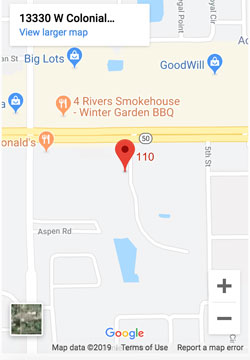
Legal Counsel, P.A. serves businesses of every size throughout Central Florida from our Winter Garden, Orlando and Seminole offices. Our formation services include:
Whether you’re a first-time owner or an entrepreneur on your third company, we can help you select the structure that fits and set it up properly. As a business formation lawyer Florida owners can reach in person or by video, we make the process straightforward.
Every business has its own legal needs, and the right answer for a small business owner isn’t always the one an accountant or a formation website suggests. Sole proprietorships and general partnerships offer no liability shield, so the comparison below starts with the entities that do.
Florida LLCs are governed by the Florida Revised Limited Liability Company Act, and they’re the most common choice for small and mid-sized businesses. The structure protects the owners’ personal assets from the company’s debts and judgments.
By default, an LLC is taxed as a pass-through: a single-member LLC is disregarded for federal income tax and reported on the owner’s return, and a multi-member LLC is taxed as a partnership. An LLC can also elect to be taxed as an S corporation or a C corporation if that produces a better result.
Operating agreements are where the real work happens, because they set out ownership percentages, management, distributions, voting and what happens when a member wants out. If you’re looking for an LLC formation attorney Orlando owners come back to, the operating agreement is where we earn it, because a properly drafted one saves you the dispute later.
A Florida corporation is owned by shareholders, governed by a board of directors and run by officers. Shareholders’ personal assets are protected from the corporation’s liabilities, and the corporation can raise capital by issuing stock, which makes it the standard choice for businesses seeking outside investors.
A C corporation pays tax at the entity level and shareholders pay tax again on dividends; a corporation that qualifies can elect S corporation status to be taxed as a pass-through instead. Corporations carry more formalities than an LLC, including bylaws, annual meetings and minutes, and for some businesses the benefits are worth it.
A Florida not-for-profit is formed under its own statute and exists to advance a stated mission rather than to distribute profit to owners. Forming the not-for-profit corporation with the state is only the first step; federal tax exemption under Section 501(c)(3) or another provision requires a separate application to the IRS, and it’s that federal status that makes donations tax deductible and exempts the organization’s income from federal tax.
A not-for-profit that solicits donations in Florida must also register with the state’s Division of Consumer Services. The structure protects the directors from personal liability for the organization’s debts when it’s operated properly, and it carries its own governance and reporting obligations.
With this many options, it can be hard to know where to begin. Our corporate formation lawyers help you pick the structure that protects your legal rights, fits your tax position and supports where the business is going.
Business formation is the first document in a company’s life, and our experienced business formation attorneys treat it that way, because the right entity separates the business’s debts from the owners’ personal assets and gives a new venture a solid foundation. We’ve seen what happens years later when it was done carelessly: partners fighting over an operating agreement that never addressed a buyout, an S election that was never filed, an entity dissolved for a missed annual report right before a lender ran a search.
Because we also handle business contracts, business sales and business litigation, we draft formation documents with those later events in mind. Michele Diglio-Benkiran has practiced business and real estate law since 1999. Richard Sierra is a commercial litigation and bankruptcy lawyer with more than three decades of experience, which is a useful perspective when the question is how a structure will hold up under pressure. Results matter to us. We offer a free consultation, and pay later options are available for qualifying clients.
We form entities for owners across Orlando, Winter Garden, Seminole and the wider Central Florida region, including Orange, Seminole, Osceola, Lake and Polk counties. Formation is one part of a full business practice; our Orlando business attorneys stay with the company for contracts, hiring, real estate and disputes as it grows.
Thirty minutes with a business formation attorney before you file will save you the cost of
converting later. The consultation is free.
A double closing real estate transaction is two back-to-back closings on the same property, usually the same day. An intermediary buys from the original seller in the first closing and sells to an end buyer in the second, keeping the difference in price. It’s the wholesaler’s alternative to assigning the contract.
Yes, in Florida. Buying a property and immediately reselling it is lawful, and each closing is a normal, fully documented transaction with its own deed, closing statement and taxes. What isn’t lawful is marketing property you neither own nor hold under contract for a fee, which can be unlicensed brokerage.
The wholesaler signs a purchase contract with the seller and a separate sale contract with the end buyer, arranges funding for the first purchase, and schedules both closings with the same title company or closing attorney. The first closing funds and records, then the second closing funds, the transactional loan is repaid, and the wholesaler receives the spread.
In an assignment, the wholesaler never owns the property; it sells its original contract to the buyer for a fee through an assignment contract, and both parties see the fee. In a double close, the wholesaler takes title and resells, the profit stays private, and the method works on contracts that can’t be assigned. The trade-off is two sets of closing costs and the need for funding.
A short-term loan, often for a single day, that funds the wholesaler’s purchase in the first closing and is repaid from the second closing. Lenders typically charge a percentage of the amount borrowed plus a flat fee, and they approve based on the two signed contracts rather than the borrower’s credit. Approval can be quick once the contracts and title commitment are in hand.
Generally not. Using the end buyer’s funds to pay the original seller, sometimes called a dry closing, is prohibited by most Florida title underwriters, and a closing agent who allows it risks the policy. Plan on your own funds or transactional funding.
Then the wholesaler owns the property, with the transactional loan due. That’s the real risk of a double closing, and it’s why the end buyer’s contract should be signed, funded and cleared through title before the first closing is scheduled. We build the contracts so the second leg is as certain as it can be before the first one funds.
Not to buy and resell a real estate property you take title to; that’s acting as a principal. You can cross into licensed activity by advertising the property itself to buyers before you own it or hold it under contract. Market your contract, not the seller’s house, and have the contract drafted so your equitable interest is clear.
Yes. Florida charges documentary stamp tax on each deed based on the consideration paid, so the A to B deed and the B to C deed each carry it, and a new mortgage on the end buyer’s side adds tax on the note. Those numbers belong in the deal analysis from the start.
Often, yes. FHA and some conventional programs restrict financing on properties resold within a short period after the seller acquired them, and most lenders want to see that the seller is on title. Cash buyers and hard money lenders are the usual end buyers in a double close for that reason, and we confirm the end buyer’s financing before the closings are set.
Selling your current home and buying the next one back to back, usually on the same day, so the proceeds from the sale fund the purchase. The contracts are written so the two closings depend on each other, and a lawyer coordinates the payoff of the old mortgage and the recording of the new one.
You may need a short-term rental or a post-closing occupancy agreement that lets you stay in the sold home for a few days. That agreement should be in writing before the sale closes, with the rent and the liability spelled out, and it’s one of the things we negotiate when we set up a concurrent closing.
Yes, and it’s usually the better arrangement, because one office controls the sequence, the wires and the recording. For a double closing in particular, a closing agent unfamiliar with A to B to C transactions is the most common reason they fall apart.
Whether you’re an investor looking to wholesale real estate or a homeowner who needs to sell and buy on the same day, a simultaneous closing rewards preparation and punishes improvisation. Call Legal Counsel, P.A. at 407-982-4321 or use our contact form to schedule your free consultation.

WE VALUE RELATIONSHIPS
Most of our clients come to us by referral and word of mouth (not advertising).

COMMITMENT TO EXCELLENCE
The Legal Counsel team is committed to serving all clients with excellence and professionalism.

EXPERIENCE MATTERS
Decades of Representation.

CUTTING EDGE TECHNOLOGY
View your entire case, communicate with us 24/7, review billing statements, documents, etc. on our bank secure, online client portal.