Board Governance and the Duties of HOA Board Members
Board members make decisions that affect every owner in the community, and they are expected to act in the association’s interest, to treat owners fairly and equally, and to avoid conflicts of interest. When a question comes up about a vote, a conflict or a duty to an owner with a disability, it helps to have an HOA lawyer the board can consult before acting rather than after a complaint arrives.
Our attorneys work with boards on board governance questions, so that decisions are made and recorded in a way that follows the governing documents and the law.
Governing Documents and Rule Changes
The declaration, bylaws and rules of a community set out what owners must do and how the board may act. Boards often review their governing documents periodically so that rules, collection procedures and enforcement measures are clearly stated. A board cannot simply rewrite them on its own, because amendments must follow the procedure the documents set out, which can involve a quorum and a vote.
Developers, boards and buyers can all benefit from a careful read of the governing documents before a problem develops. For homeowners, a rule change that seems unfair is a good reason to ask which procedure the board followed.
Assessments and HOA Collections in Florida
Assessments pay for maintenance and repair of common areas and the other costs of running the community, and unpaid assessments can cause real trouble for an association’s budget and for property values. The statute sets a number of steps for collecting them. An association may not require payment of attorney fees tied to a past due assessment until it has sent the owner a written notice of late assessment. If the governing documents allow it, an association may also charge an administrative late fee of no more than the greater of 25 dollars or 5 percent of each late installment.
Our team assists boards with HOA collections, including notices, payment plans and the decision about when to escalate. Homeowners who dispute an amount, a fee or a fine can also ask us to review the account and the association’s procedure.
Liens for Unpaid HOA Assessments
An association with the right authority in its governing documents holds a lien on each parcel to secure payment of assessments. Before it records a claim of lien, the statute requires a written demand that gives the owner 45 days to pay. In most cases, an association may not file suit to foreclose that lien until 45 days after the owner has been given notice of its intent to foreclose, and that notice cannot be sent until the 45 days from the lien demand have passed. The wait does not apply if the parcel is subject to another party’s foreclosure or forced sale, or if the owner is in bankruptcy.
Owners have options as well. An owner can record a notice of contest of lien, and the clerk of the circuit court then mails it to the association. Once that notice is served by the clerk’s mailing, the association has 90 days to file an action to enforce the lien, and if it does not, the lien is void. The 90 days are extended while a bankruptcy stay prevents the association from filing. Whether you are an association preparing a lien or an owner responding to one, our attorneys handle HOA liens with attention to each of these timelines.
Estoppel Certificates
When a home is sold or refinanced, the buyer’s lender and the closing agent usually need an estoppel certificate that states what the owner owes the association. An association must issue it within 10 business days of a written or electronic request. It may charge a reasonable fee that may not exceed 250 dollars when no delinquent amounts are owed, and if it misses the 10 business days it may not charge a fee at all.
Errors on these certificates can affect an association’s later collection rights, so accuracy matters. We help associations prepare and review estoppel certificates, and we help buyers and sellers understand what a certificate says.
Covenant Enforcement, Fines and Hearings
An association has a duty to enforce its rules fairly and consistently, and an owner has a right to a fair process before being penalized. Under the statute, a board may not impose a fine or suspension until it gives the owner at least 14 days’ written notice of the right to a hearing, and that hearing goes before a committee of at least three board-appointed members who are not officers, directors or employees of the association, or the spouse, parent, child or sibling of an officer, director or employee. The committee’s role is limited to confirming or rejecting the fine or suspension the board proposed.
For boards, our work on covenant enforcement focuses on notices, documentation and hearing procedure so that a fine will stand up if it is challenged. For owners, it means checking whether the association followed those steps and whether the rule is being applied evenly.
HOA Litigation and Dispute Resolution
Disputes often arise over money, rules and records. Most HOA disputes can be resolved with letters, hearings and negotiation, but some require legal action and a decision to file a lawsuit. Before certain disputes can be filed in court, the statute requires a demand for presuit mediation. Those disputes include covenant enforcement disputes, disputes over amendments to the association documents, disputes about board and membership meetings, and disputes about access to the official records. Collection of assessments and fines is not part of that requirement.
If your matter does need to go to court, our attorneys provide HOA litigation support for associations and for owners. We can also help you decide whether a demand for mediation, a records request or a negotiated resolution makes more sense first.
Legal Guidance for Homeowners in an HOA
If you live in an HOA community, you may reach a point where you and the association disagree. Unless the law or the governing documents provide otherwise, official records must be made available to a parcel owner for inspection or copying within 10 business days of a written request, at a location within 45 miles of the community or in the county where the association is located. Some records are protected from owner access. Reading the records you can obtain, along with the governing documents and your notices, is often a sensible first step. Our attorneys can help you protect your rights, and we offer legal guidance for homeowners who want to understand their rights, what the association may and may not do, and how to respond.
When Should You Consult an Attorney About an HOA Matter?
It is wise to talk with an attorney early, before you respond to a demand letter, a hearing notice or a notice of lien, and before a board votes on a rule change or a collection step. Boards and owners who ask questions early often have more options than those who wait until a deadline is close.
How to Choose an HOA Attorney in Florida
Hiring a lawyer is an important decision, and it should not rest on advertising alone. These questions can help you compare any HOA attorney in Florida, including us:
- Which side of the dispute do you represent, the association or the homeowner?
- Have you handled the specific issue I face, such as collections, liens or covenant enforcement?
- What steps do you expect in my matter, and how will you keep me informed?
- What will my matter cost, and how is that explained in writing?
Michele Diglio-Benkiran, the founder of Legal Counsel, P.A., has practiced business and real estate law since 1999, and her real estate practice includes homeowner associations. Results matter, and so does clear communication with each client. We offer a free consultation, and pay later options are available for clients who qualify.
Where We Work
Legal Counsel, P.A. serves clients across Florida from three offices.
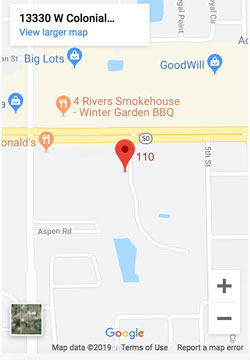
- Winter Garden (main office): 13330 W Colonial Drive Suite 110, Winter Garden, FL 34787, 407-982-4321
- Orlando: 3416 Shader Road, Suite 112-B, Orlando, FL 32808, (407) 395-2653
- Pinellas County: 5666 Seminole Blvd., Suite #113, Seminole, Florida 33772
Facing an HOA dispute or a board decision you need to get right? A short conversation with a Florida HOA lawyer will tell you where you stand and what your options are. The first consultation is free.